
If there’s one thing I make all year round, it’s broth. It is the backbone of the Savage Feast. Whether I’m making soup, stew, beans, or sauces, broth is where the flavor starts. And the best part? It’s mostly made from scraps and odds and ends—things you’d normally toss.
This post is part recipe, part philosophy. Because broth isn’t just a thing you make—it’s a way of looking at your kitchen, your garden, and your food waste differently.
The Broth Bag
We keep a big zip-top freezer bag labeled “BROTH” in our kitchen freezer at all times. Every time we prep vegetables, we ask ourselves: “Could this go in the broth bag?”
Here are some of our favorite additions:
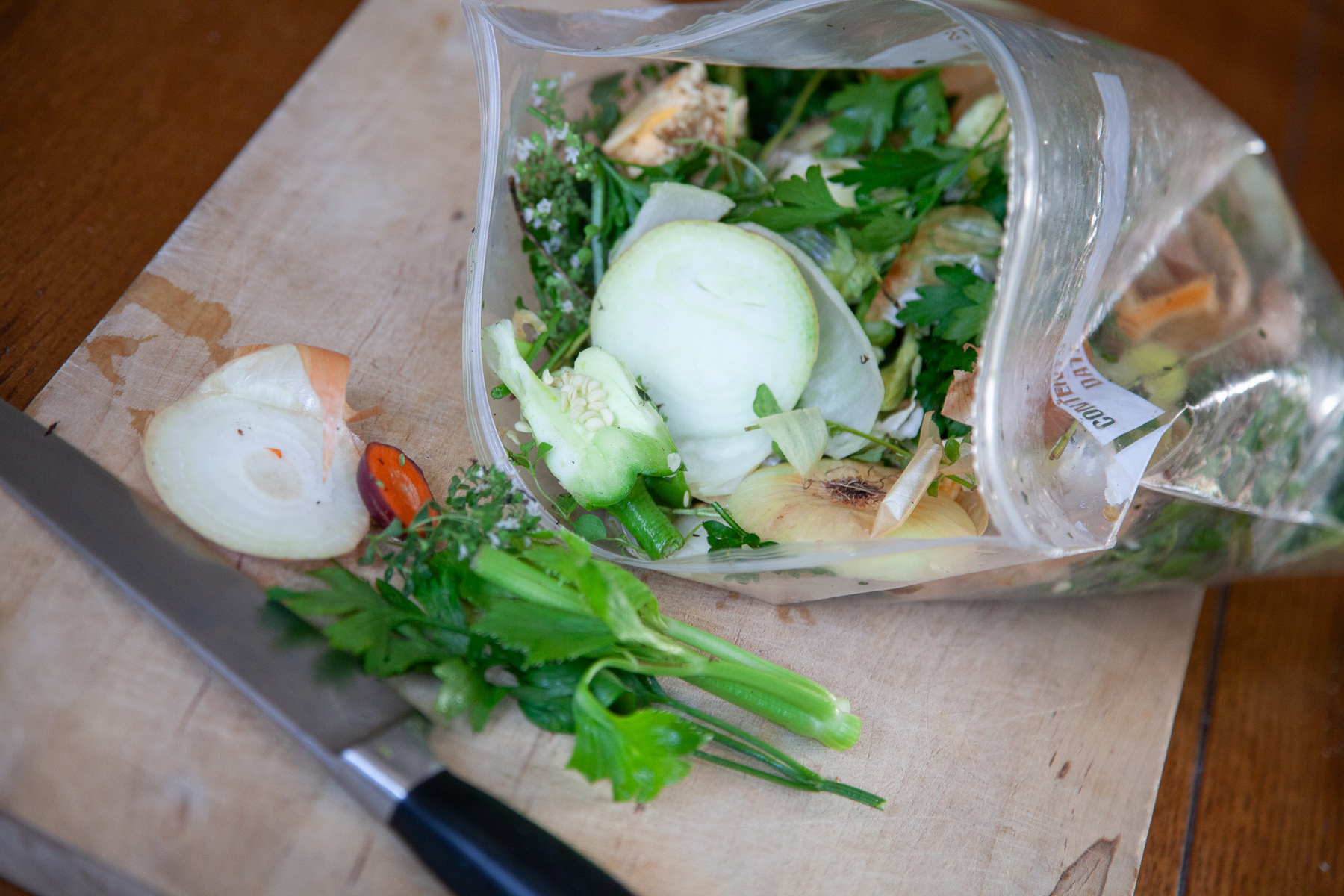
- Onion peels and ends (these are the foundation)
- Carrots and celery (plus tops and trimmings)
- Asparagus ends
- Broccoli stalks
- Potato peels
- Bell pepper scraps
- Zucchini ends
- Parsley stems
- Pea pods (after shelling English peas)
We skip anything too pungent or overpowering: no garlic, radishes, spicy greens, or strong herbs unless we’re going for something very specific.
You can add mushrooms stems too—but we don't—those are reserved for a special Thai-style broth I make (more on that in another post). And when it comes to leafy greens and their flavorful, mineral-rich cooking water (pot liquor), that’s a whole topic of its own too. Stay tuned.
How We Make It
When the broth bag is full, or more accurately, when we have three full bags, it’s time to make broth. We do this in a big pot, but you can scale it down to just one bag's worth if you’re starting small.
We pour the vegetables into a stockpot, cover with water (usually about 10–12 cups per bag), add a couple bay leaves, bring everything to a boil, and then simmer for 45 minutes. That’s it. Then we strain and store.
This short simmer time keeps the flavor clean and bright—not overcooked or muddy. You don’t need hours to get something nourishing and delicious.
Control Your Salt
One of the biggest benefits of making your own broth is salt control. Most store-bought vegetable broth—even the so-called low-sodium ones—are packed with salt. I like to keep my broth unsalted and season it when I cook. That way, I can build flavors dish by dish without everything tasting the same. It’s a small shift, but it makes a big difference.
Garden Vegetable Broth
Equipment
- 1 Stockpot
- 1 Freezer bags or other container for scraps
- 1 Fine mesh strainer for straining broth
- 1 Freezer-safe containers for storing broth
Ingredients
- Onion peels and ends
- Carrot tops and trimmings
- Celery tops and trimmings
- Asparagus ends
- Broccoli stalks
- Potato peels
- Bell pepper scraps
- Zucchini ends
- Pea pods from shelling English peas
- 3 Bay leaves
- 10-12 cups Water per bag of scraps
Instructions
- Keep a labeled freezer bag to collect clean, non-pungent vegetable scraps.
- When full (or with 2–3 bags), empty into a large stockpot.
- Add water to cover and 4–5 bay leaves.
- Bring to a boil, then simmer uncovered for 45 minutes.
- Strain broth through a fine mesh sieve or colander.
- Cool completely and store in fridge or freezer. Freeze in ice trays for small portions.
- Compost the strained vegetables. Zero waste!
Notes
How We Store Our Broth (and How You Can Too)
We’re lucky enough to have a chest freezer in our basement. We found it secondhand, and honestly, it’s one of the best tools we have for eating from our garden all year long. It lets us store jars of broth, sauces, chopped veg, and full meals for winter when the ground is frozen but we’re still hungry for something nourishing.
If you’ve got the space, I highly recommend keeping an eye on Marketplace, Craigslist, or garage sales. A second freezer doesn’t need to be huge or new—it just needs to work.
But if freezer space is tight, here are some great alternatives:
- Freeze broth in ice cube trays or muffin tins, then pop the cubes into bags—perfect for small portions.
- Keep a jar or two in the fridge and use it within a week.
- Pressure can it, if that’s something you're comfortable with.
Not feeling well?
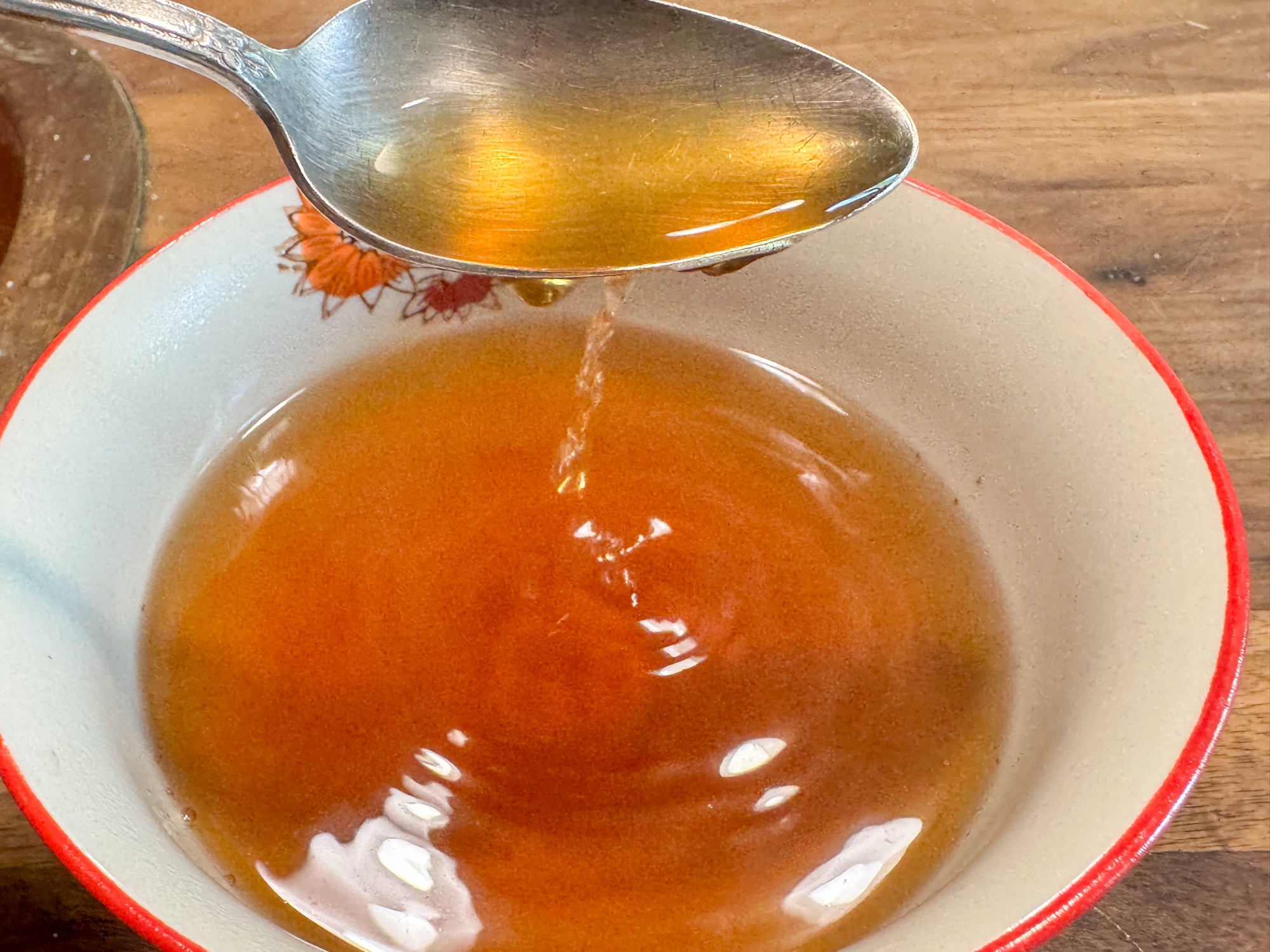
This broth is a total game changer when I'm under the weather. I just thaw a container until it's piping hot—like a simple, cozy soup. Then I add a splash of soy sauce or vegan fish sauce (recipe coming soon!) and sip away. It’s comforting, nourishing, and exactly what I need.


Laurie Black says
Thank you! I will definitely give this a try!
Anne says
You’ll get addicted!
Arleigh says
Great idea!
Melanie says
This is something we've yet to do, and we are now inspired to do so. Thank you!
Anne says
I think you'll love it. It become second nature after a while.