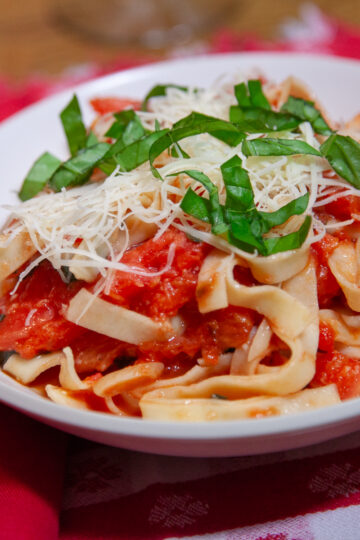
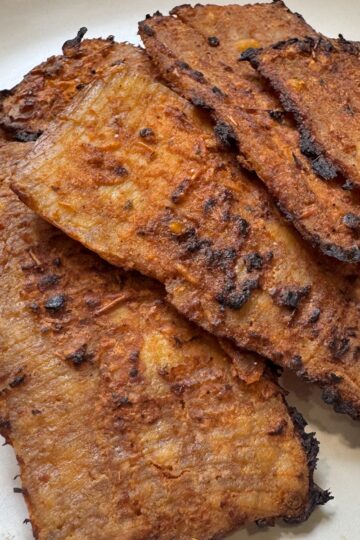
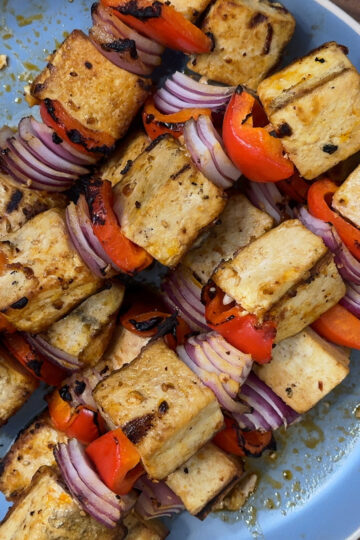
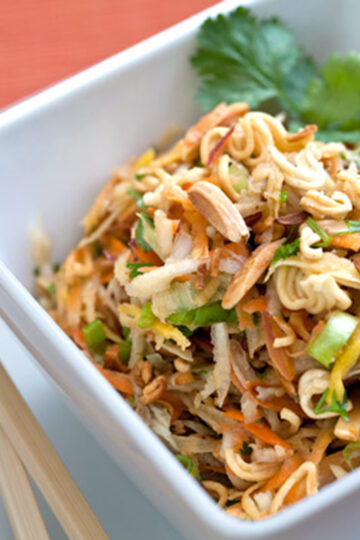
If there’s one ingredient that quietly makes its way into nearly every great meal we cook, it’s fish sauce.
Well—vegan fish sauce, to be clear.
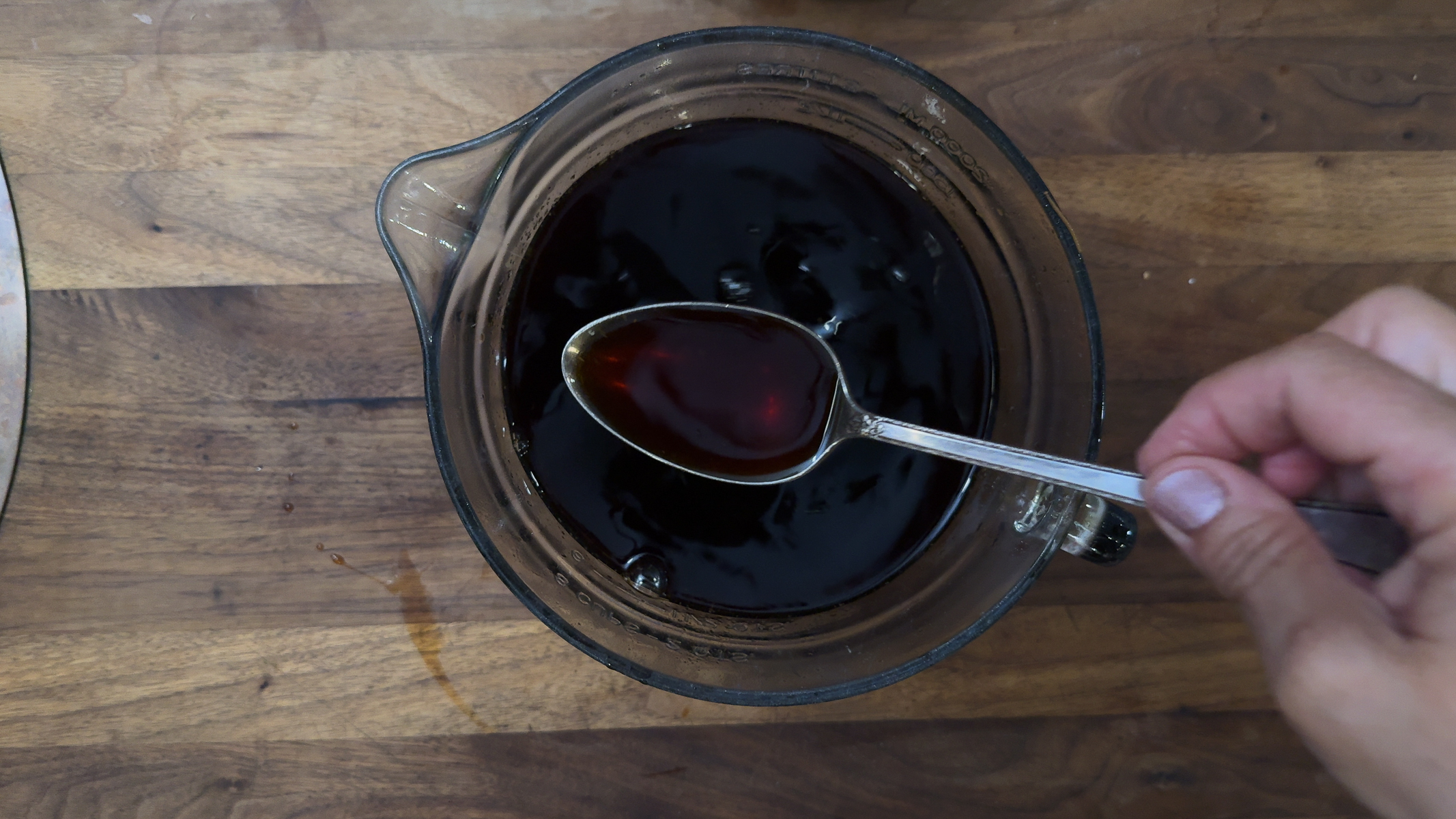
We drizzle it on stir fries, spoon it into rice bowls, swirl it through brothy soups. We use it in marinades, dipping sauces, even dressings. It’s that salty-sweet-deep-umami note that pulls everything together. Around here, it’s a kitchen staple.
You’ll see it in a lot of recipes on The Savage Feast. So it felt right to give it its own post.
You can buy vegan fish sauce—some co-ops and Asian markets carry it—but it’s not always easy to find. And even when you do, the flavor can vary a lot.
That’s why I usually make it myself. It’s simple, reliable, and honestly? It tastes better.
The version we use is adapted from The Korean Vegan, who developed what I think is the best vegan fish sauce out there. She explains the “why” behind every ingredient—the balance, the fermentation magic, and how to swap things in and out.
👉 Check out her original recipe here
How We Do It
I’ve kept her core ideas, but I adapt the recipe based on what I have on hand or what’s available locally. For instance:
- Fresh mushrooms instead of dried.
A lot of recipes call for dried mushrooms for a deeper umami flavor. That might be true. But we have access to beautiful fresh shiitakes at our local store, and they make a rich, clean-tasting broth. So that’s what we use. - Ethiopian peppercorns: A friend brought these back for us after traveling (was it Ethiopia? I think so!) and they’ve become one of our favorite ingredients. Deep, floral, slightly citrusy — we use them whenever we make this sauce. But any whole peppercorn will work, and it’s fun to experiment.
- Saltiness and seaweed: Want a deeper seaweed flavor? Add a little more kombu or wakame. Want it less salty? Use a lighter soy sauce or tamari. You really can play with this one until it’s dialed in to your taste.
Vegan Fish Sauce
Equipment
- 1 Saucepan
- 1 Sieve or chinois
- 1 Airtight container
Ingredients
- 3 cups filtered water
- 1½ cups soy sauce preferably soup soy sauce
- 6 fresh shiitake mushrooms
- ½ cup oyster mushrooms or king oyster mushrooms
- ¼ cup enoki mushrooms
- ¼ cup Korean apple pear or Fuji apple, unpeeled
- 5 pieces dashima (kombu) 2-inch pieces, NOT nori
- 2 tablespoons dried wakame
- 2 tablespoons mirin
- 2 tablespoons balsamic vinegar
- 2 tablespoons rice vinegar
- 1 teaspoon whole black peppercorns try different varieties
- 1 teaspoon oyster mushroom sauce
- 2 medium shallots unpeeled, halved
- 4 garlic cloves unpeeled, tips trimmed, halved
Instructions
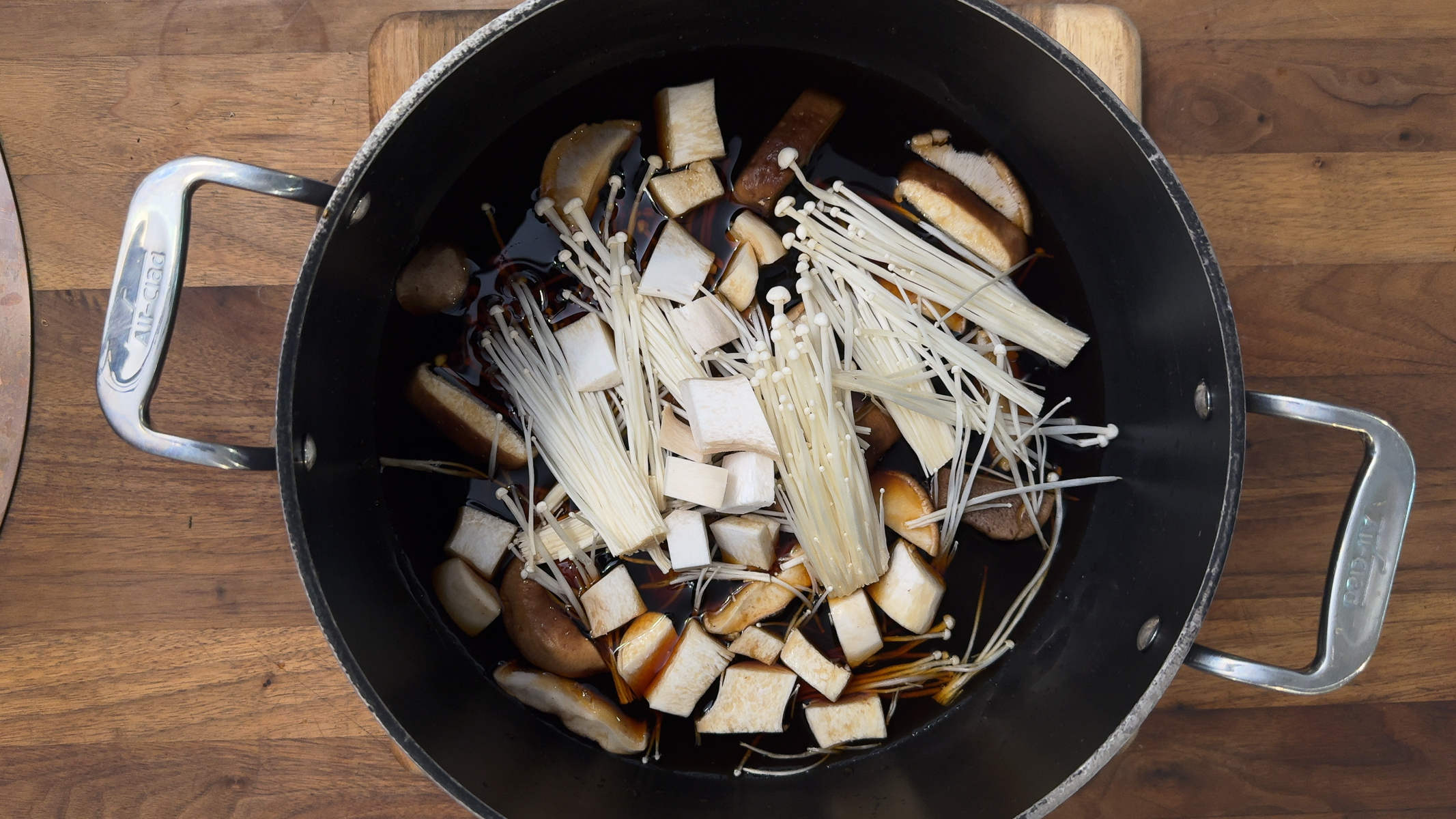
- In a saucepan, combine the soy sauce, mushrooms, wakame, dashima, vinegars, mirin, peppercorns, mushroom sauce, apple pear, shallots, garlic, and filtered water.
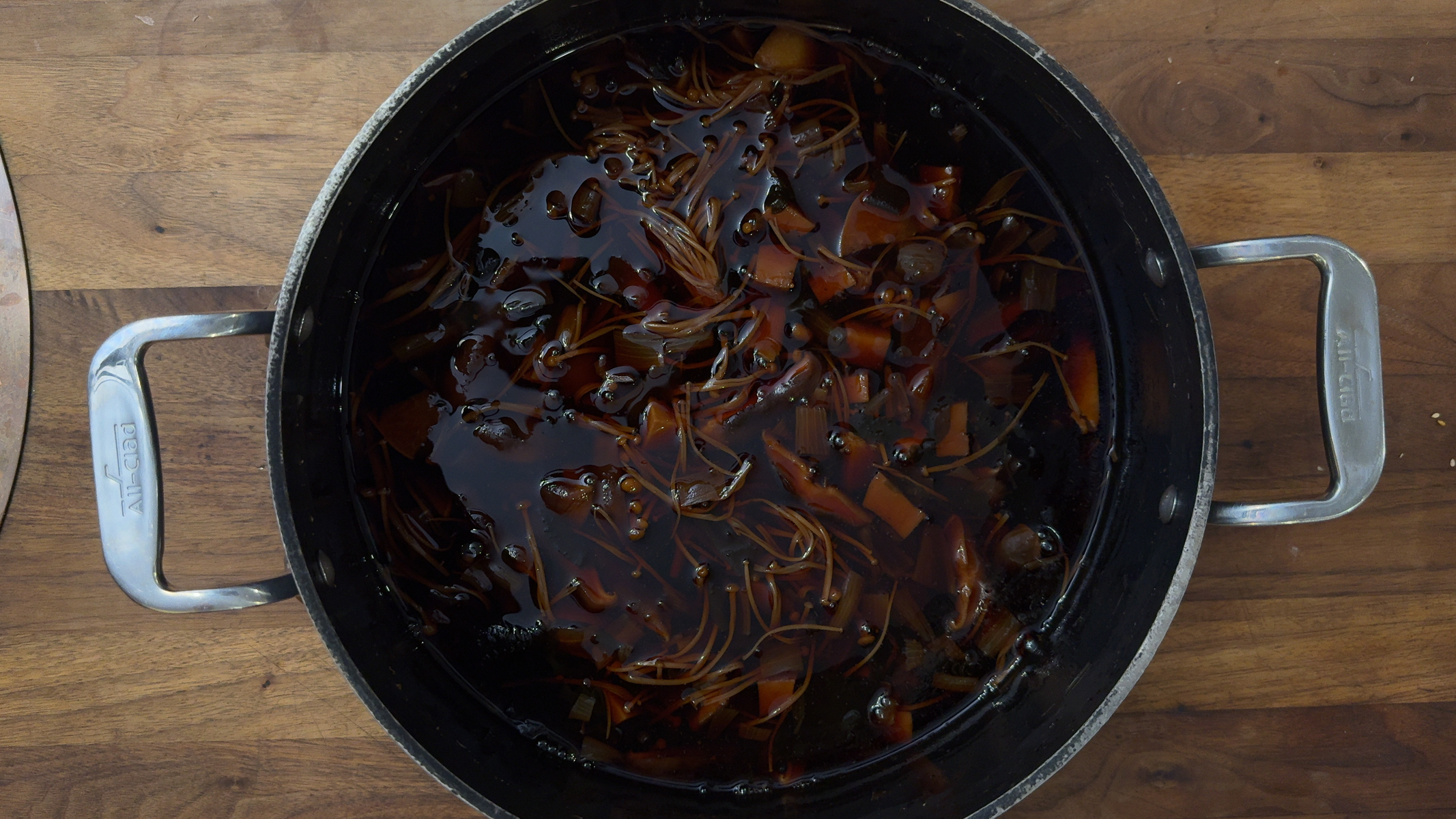
- Bring to a boil, then reduce heat to low. Simmer uncovered until the liquid reduces by about half, roughly 90 minutes.
- Remove from heat and allow to cool completely.
- Strain through a sieve or chinois into an airtight container.
- Store in the refrigerator for up to 3 months, or freeze for longer storage.
Notes
Make a Batch
It takes about 90 minutes to simmer down, and then it keeps in the fridge for several months. You can also freeze it in small containers for longer storage. Once you have it on hand, you’ll find yourself reaching for it all the time.
We made our most recent batch using fresh garlic pulled straight from the garden. Garlic harvest here usually happens around the Fourth of July, and this year we dug ours up right on schedule. Before it’s cured, garlic has a milder, juicier flavor. The cloves can be a little trickier to peel since the papery skins haven’t fully formed. But when you simmer it down in a broth like this, it turns almost buttery. It added something really special to this batch.