
We got a tiller from a garage sale for $50 and fired it up every spring for 16 years. Three years ago, we gave up on tilling. It was loud, rough on the soil, and left us feeling like we were battling our garden instead of working with it. That’s when we discovered the broadfork—and everything changed.
A broadfork is a simple, heavy-duty tool with long tines that you step onto and gently rock back. It lifts and aerates the soil without flipping or destroying it. Once you get the hang of it, there’s a rhythm: step, press, lean, move. Step, press, lean, move. It’s kind of like a mini workout dance. And it’s actually kind of fun.
Just like my garden vegetable broth is the deep, quiet base note of so many of my dishes—the thing you don’t always see, but you taste in every bite—broadforking is the invisible groundwork of the garden. It doesn’t look flashy. It doesn’t hum like a tiller. But with every gentle lift of the soil, it sets the stage for everything to grow. Broth builds flavor. Broadforking builds soil. And from both, the feast begins.
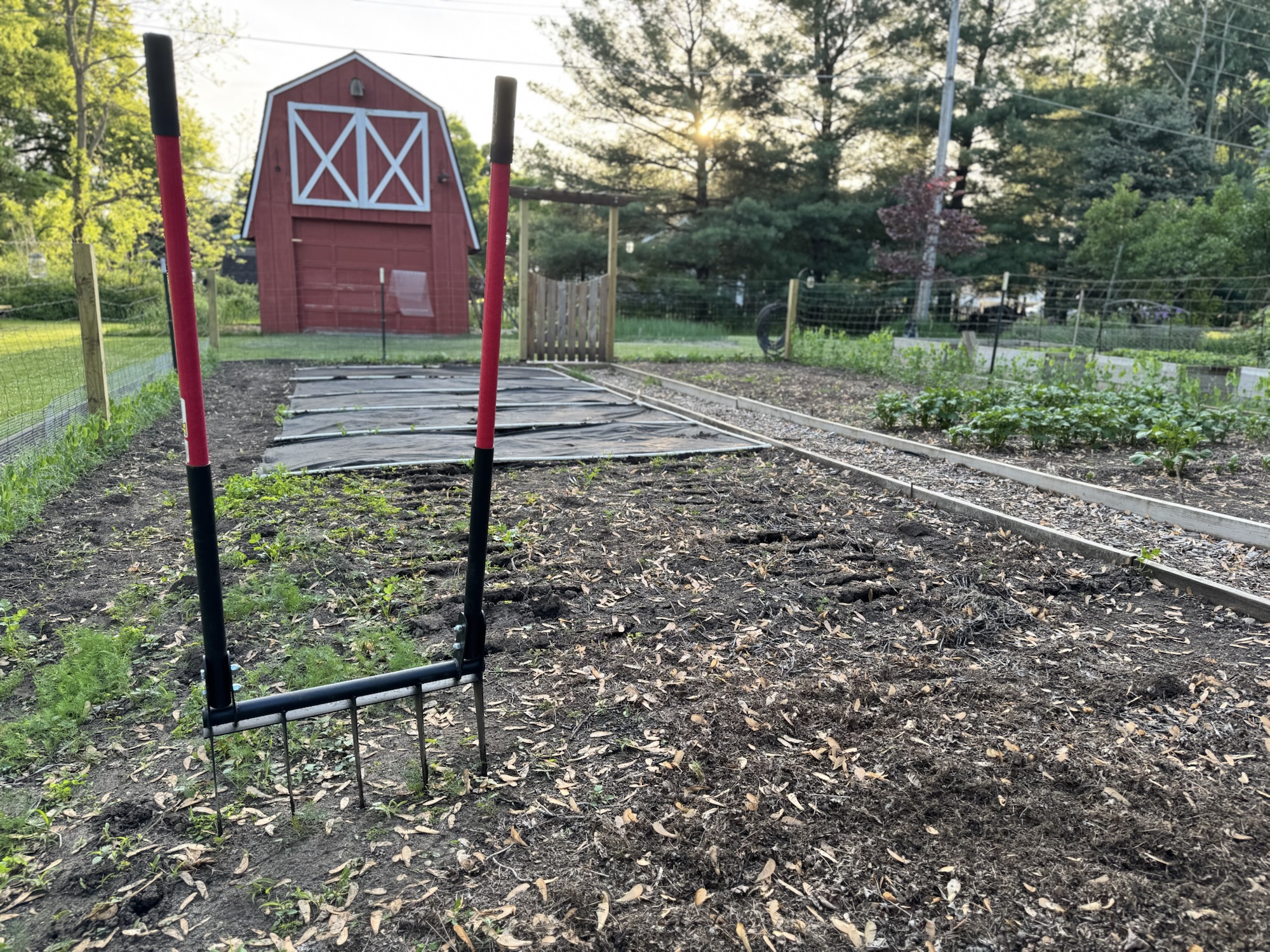
Why We Do It
Broadforking is better for your soil, your plants, your body—and your sanity.
When you till, you shred the soil structure. You break up roots, disturb earthworms, and destroy the underground fungal networks that actually help your plants grow. Broadforking, on the other hand, gently opens the soil to let in air and water while keeping those life-giving systems intact.
Here’s what we’ve seen since we started broadforking:
- Dramatically fewer weeds: Tilling stirs up weed seeds and brings them to the surface. Broadforking doesn’t disturb the layers like that.
- Way less pest pressure: Healthier soil leads to healthier plants, and healthier plants can better fend off bugs.
- More robust plants: We’ve noticed stronger growth, larger leaves, and higher yields across the board.
- Less work, more joy: No noise, no gas, no wrangling a tiller. Just you and your fork, row by row. It’s peaceful. And surprisingly satisfying.
- Durability: A broadfork is a one-time purchase. Ours is three years old and still in perfect shape.
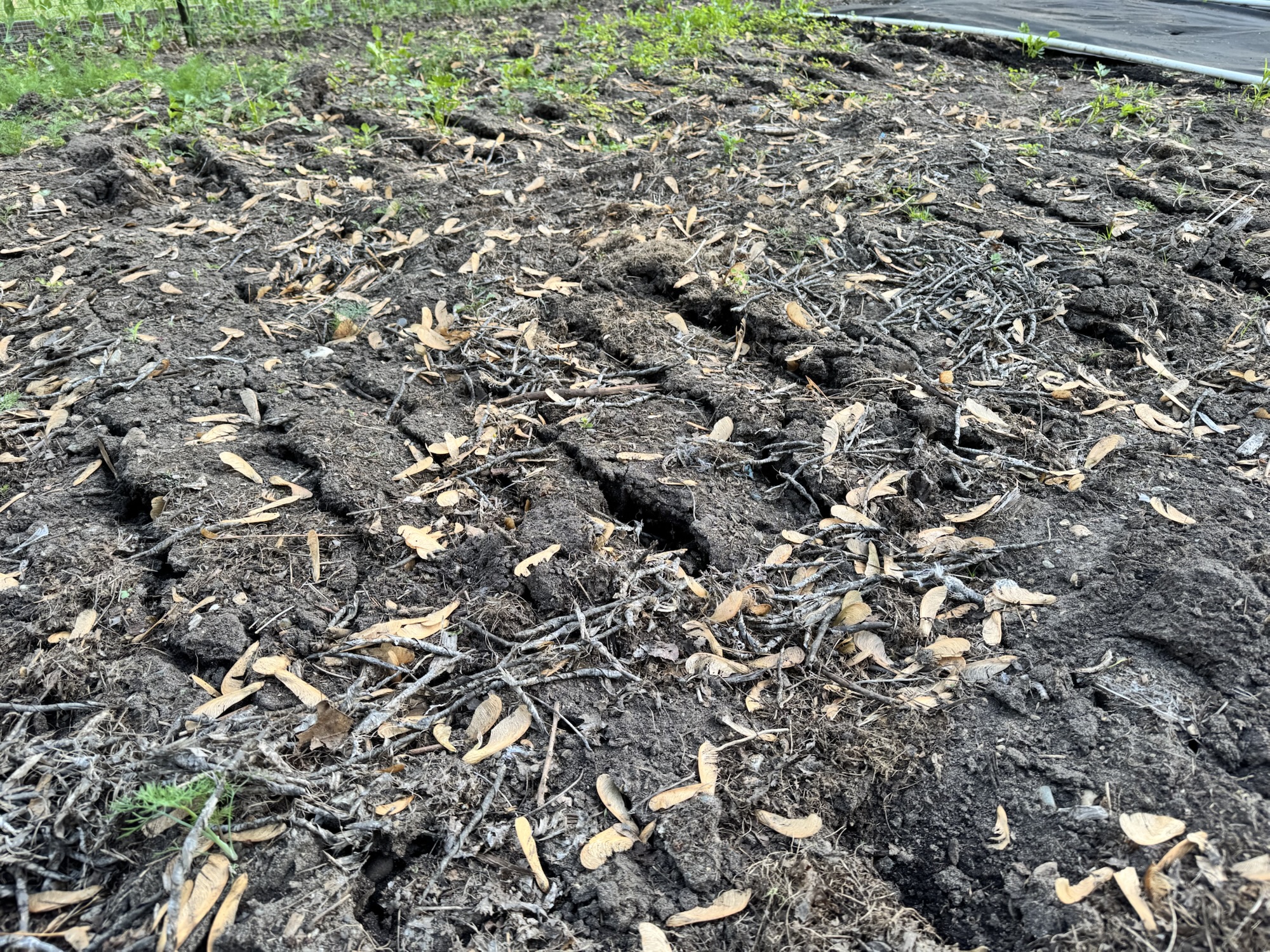
The Underground Magic
The biggest benefit of broadforking might be invisible: it protects and enhances the mycorrhizal network in your soil. These fungal systems connect plant roots and help them absorb water and nutrients. Tilling destroys these connections. Broadforking preserves them.
It also improves soil aeration and moisture retention. That means less runoff, more water getting to roots, and better oxygen flow. You’re not just prepping soil—you’re building a thriving underground ecosystem.
What If You’re Working With a Small Garden or Raised Beds?
You don’t need a half-acre and a full-size broadfork to get the benefits. If you’re working in a 10x10 plot, a few raised beds, or even just some compact rows, you can still use the same principles with simpler tools:
- Mini broadforks: Some companies sell smaller broadforks that are easier to maneuver in tight spaces.
- Digging forks: A regular garden fork works well if you use it like a broadfork—press in with your foot, lean it back just enough to lift, and move slowly across the bed.
- Hand tools: In narrow raised beds, a hori hori knife or long trowel can be used to loosen compacted soil around where you plan to plant.
- Build good soil over time: In very small spaces, regular layering of compost and mulch can reduce the need for deep forking. But even one thorough fork each season can make a big difference.
The important part is the technique: lift the soil to open it up without turning it over. Preserve the layers. Let the soil life keep doing its work.
Ready to Try?
If you’re tired of fighting your garden, try working with it. Broad forking is gentle, effective, and kind of addictive. All you need is a quality fork, a little time, and a willingness to slow down and listen to your soil.
It’s not just a tool—it’s a mindset. And it’s made all the difference for us.
Tom Wickersham says
I'm going to get a broadfork for when we prep our garden for next year!
Anne says
You should! It's a game changer.